350億ドルがたった6日で溶けた理由
Why $35 Billion Melted in Just Six Days
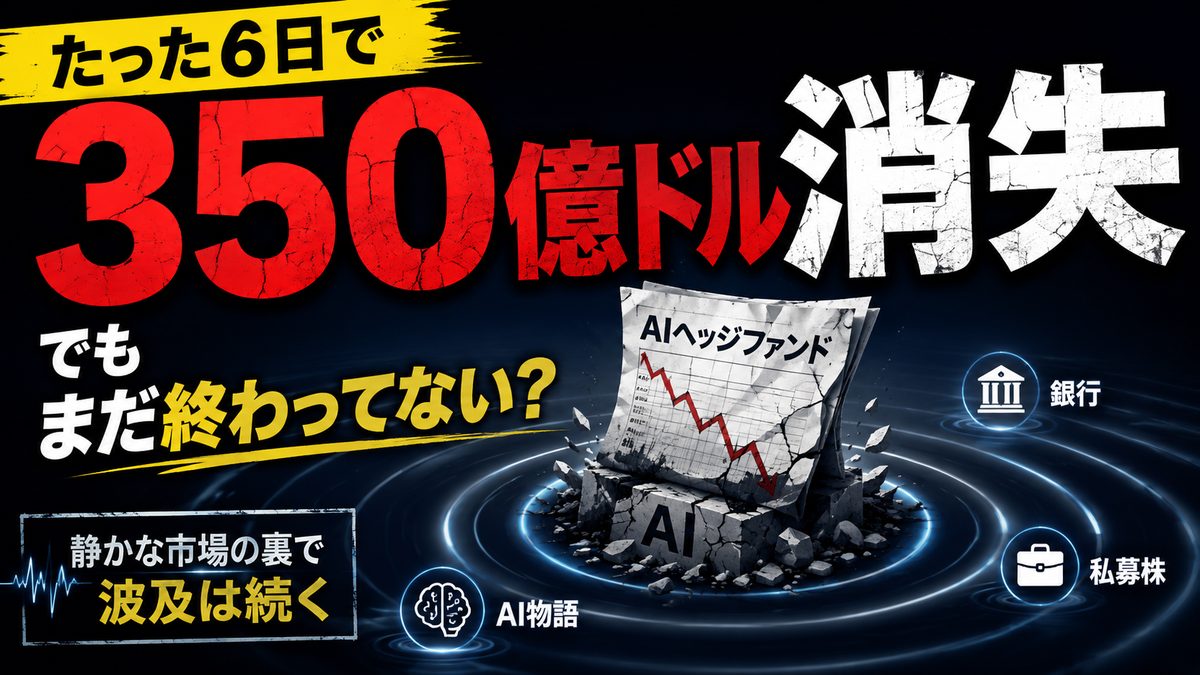
2026年7月30日の朝、市場が開く前に、世界で最も有名になったヘッジファンド※の中身が、まるごと売られました。渦中のファンドとはSituational Awareness LP。AIの未来を予言する論文で名を上げた20代の元OpenAI研究者、レオポルド・アッシェンブレナー氏のファンドです。ピーク時に約450億ドルと報じられた資産は、この取引の後、約100億ドルまで縮みました。350億ドル、日本円でおよそ5兆円が、わずか6日で消えた計算になります。
On the morning of July 30, 2026, before the market opened, the contents of the world's most famous hedge fund were sold off in a single transaction. The fund in question: Situational Awareness LP, run by Leopold Aschenbrenner, the twenty-something former OpenAI researcher who made his name with an essay prophesying the future of AI. Assets reported at roughly $45 billion at their peak shrank to about $10 billion after the trade. That works out to $35 billion, roughly five trillion yen, vanishing in just six days.
※ ヘッジファンド(hedge fund)とは、少数の大口投資家から資金を預かり、借入や空売りも使って高いリターンを狙う私募のファンドのことです。誰でも買える投資信託と違い、規制が緩い代わりに出資者は機関投資家や富裕層に限られます。
※ A hedge fund is a private investment vehicle that takes money from a small number of large investors and pursues high returns using borrowed money and short selling. Unlike mutual funds anyone can buy, they face lighter regulation but are open only to institutions and the wealthy.
大事のはずが、週明けの市場は拍子抜けするほど静かでした。プライムブローカー※になった銀行は損失を発表しておらず、当然政府は動いていない。株価は暴落どころか、売却の当日に底を打って反発した。週末には「波及は限定的」という総括記事が出そろいました。
For an event this size, the following week was almost anticlimactically quiet. The banks acting as its prime brokers announced no losses, and naturally no government stepped in. Far from crashing, the stocks involved bottomed and rebounded on the very day of the sale. By the weekend, the wrap-up pieces had all landed on the same verdict: contagion contained.
この記事で考えたいのは、その総括を信じていいのか、です。というのも、過去の有名な破綻では、「限定的(contained)」は毎回、初日に出る判定だったからです。2021年のArchegosのときも、初日の市場は「限定的」と総括しました。Credit Suisseがあの一撃を起点に消滅するのは、2年後です。同じ2021年のゲームストップ騒動も、当初は「個人投資家の奇妙な祭り」扱いでした。米国株の決済ルールが書き換わり、渦中のファンドが閉鎖されるのは、1年以上あとです。
What this article asks is whether that verdict deserves your trust. Because in every famous blowup on record, "contained" is the ruling that comes out on day one. When Archegos blew up in 2021, the market's day-one summary was "contained" too. Credit Suisse ceased to exist, with that blow as the starting point, two years later. The GameStop saga of the same year was initially filed away as a strange retail-investor carnival. America's stock-settlement rules got rewritten and the fund at the center shut its doors more than a year afterward.
破綻のニュースで本当に見るべきものは、破綻の瞬間ではありません。そこから始まる波及が、どの経路を通り、どれくらい遅れて、誰に届くかです。この記事では、まず今回の6日間を実際の株価データで測り、次に過去3つの事件の「波及の記録」をケーススタディとして並べ、最後に、今回の波及がすでに走り始めている3つの経路を追いかけます。
What deserves attention in blowup news is never the moment of the blowup. It is the ripple that starts there: which channel it travels, how long it lags, and whom it finally reaches. In this piece we first measure the six days with actual price data, then line up the ripple records of three historical cases as case studies, and finally track the three channels along which this one is already moving.
439%のリターンと、4倍のレバレッジ
A 439% Return and 4x Leverage
レオポルド・アッシェンブレナーという人物の経歴は、それ自体が一本の急騰チャートのようなものでした。19歳でコロンビア大学を首席で卒業。OpenAIの安全性チームに入り、2024年4月に退社します。退社の経緯を巡っては、会社側は情報漏洩を挙げ、本人は安全性への懸念を上層部に伝えたことへの報復だと主張し、言い分は今も対立したままです。その2ヶ月後、無職になったばかりの23歳が「Situational Awareness」という165ページの論文を公開しました。AGI※は2027年にも実現し、AIが今後10年の世界経済と安全保障を支配する、という予測です。シリコンバレーはこれを回覧板のように読み回し、論文はほとんど聖典の扱いを受けます。
Leopold Aschenbrenner's biography reads like a price chart going vertical. Valedictorian of Columbia University at 19. A job on OpenAI's safety team, which he left in April 2024. The accounts of that departure still conflict: the company cited a leak of information, while he maintains it was retaliation for raising safety concerns with leadership. Two months later, the newly unemployed 23-year-old published a 165-page essay titled "Situational Awareness," predicting that AGI could arrive as soon as 2027 and that AI would dominate the world economy and national security for the next decade. Silicon Valley passed it around like a circular, and the essay was treated as something close to scripture.
※ AGI(汎用人工知能)とは、特定の作業だけでなく、人間が行うあらゆる知的作業をこなせるAIのことです。現在のAIがどこまで近づいているかは、専門家の間でも意見が分かれています。
※ AGI (artificial general intelligence) is AI capable of any intellectual task a human can do, not just specific jobs. How close today's AI is to that bar is still disputed among experts.
彼は次に、この聖典をそのまま金融商品にしました。論文と同名のファンドを立ち上げ、約2億2,500万ドルで運用開始。運用経験はゼロ。それでも論文に共感した著名人たちが出資しました。結果は、当初、圧倒的でした。2026年上半期のリターンはプラス439%。設立からの累計ではプラス1,551%。資産は報道ベースでピーク時約450億ドルに達し、2年前に論文を書いていた無職の若者は、世界で最も成功したヘッジファンドの運用者と呼ばれるようになります。
His next move was to turn the scripture itself into a financial product. He launched a fund bearing the essay's name and started managing roughly $225 million. Zero prior experience running money. Prominent believers in the essay invested anyway. The results, at first, were overwhelming: up 439% in the first half of 2026, up 1,551% since inception. Assets reached a reported peak of about $45 billion, and the unemployed young man who had been writing an essay two years earlier came to be called the manager of the world's most successful hedge fund.
中身は、論文の世界観の写し絵です。直近の13F※で開示されていた主力は、燃料電池のBloom Energy、メモリのSanDisk、AIクラウドのCoreWeave、データセンターのIREN、Core Scientific。この5銘柄だけで開示ポートフォリオの76%を占めていました。反対側では、AIに出遅れたと見なした既存ソフトウェア企業、たとえばAdobeを空売り※していました。そしてこの全体に、報道によれば最大4倍のレバレッジ※がかかっていました。
The portfolio was a tracing of the essay's worldview. The core holdings disclosed in the latest 13F: fuel-cell maker Bloom Energy, memory maker SanDisk, AI cloud provider CoreWeave, data-center operators IREN and Core Scientific. Those five names alone made up 76% of the disclosed book. On the other side, he was short the incumbent software companies he judged to be losers of the AI era, Adobe among them. And over the whole structure sat, according to reports, as much as 4x leverage.
※ 13Fとは、米国で1億ドル以上の株式を運用する機関投資家が四半期ごとに提出を義務づけられている保有報告書のことです。約45日遅れで公開されるため、中身は常に少し古い情報です。
※ A 13F is the quarterly holdings report that institutional investors managing over $100 million in US stocks must file. It becomes public with a roughly 45-day delay, so its contents are always slightly stale.
※ 空売り(ショート)とは、株を借りて先に売り、値下がりした後に買い戻して差額を稼ぐ取引のことです。予想が外れて株価が上がると、損失は理論上無限に膨らみます。
※ Short selling is borrowing shares to sell first, then buying them back cheaper to pocket the difference. If the stock rises instead, losses are theoretically unlimited.
※ レバレッジ(leverage)とは、借入を使って手元資金より大きな金額を運用することです。4倍なら、株価が10%動くだけで手元資金の40%が動きます。増えるときも減るときも、です。
※ Leverage means using borrowed money to run a position larger than your own capital. At 4x, a 10% move in the stock moves 40% of your capital, on the way up and on the way down alike.
7月、この構造が両側から同時に燃えました。きっかけはAI関連株全体の急落です。7月最終週だけで半導体株から1兆ドル超の時価総額が消える歴史的な下げの中、ファンドの主力銘柄は軒並み崩れました。私たちが実際の株価データで測ると、6月30日を起点とした7月の最大下落率は、SanDiskがマイナス55.3%、Nebiusがマイナス46.3%、Bloom Energyがマイナス45.9%、CoreWeaveがマイナス38.9%。同じ期間の半導体ETF(SMH)はマイナス23.1%ですから、彼の銘柄はセクター全体の1.5倍から2.4倍の速さで落ちたことになります。そして注目すべきは反対側です。空売りしていたAdobeは、同じ7月にプラス28.5%まで買い上げられました。しかもAdobeの高値の日付は7月29日。ロング側の全銘柄が底を打ったのと同じ日です。買っていた株は最大55%下がり、売っていた株は28%上がる。両側が同じ日に最悪値を付ける。4倍のレバレッジがかかったポートフォリオにとって、これは致命傷に近い出来事です。
In July, this structure caught fire from both sides at once. The trigger was a broad rout in AI stocks. In a historic decline that erased over $1 trillion of semiconductor market value in the final week of July alone, the fund's core holdings collapsed across the board. Measuring with actual price data, the maximum July drawdowns from the June 30 close were: SanDisk down 55.3%, Nebius down 46.3%, Bloom Energy down 45.9%, CoreWeave down 38.9%. Over the same stretch the semiconductor ETF (SMH) fell 23.1%, meaning his names fell 1.5 to 2.4 times faster than the sector. And look at the other side of the book. Adobe, which he was short, was bid up as much as 28.5% that same July. Its high came on July 29, the very day every one of his longs bottomed. The stocks he owned fell as much as 55%; the stock he was short rose 28%; both sides printed their worst levels on the same day. For a portfolio running 4x leverage, that is close to a fatal event.
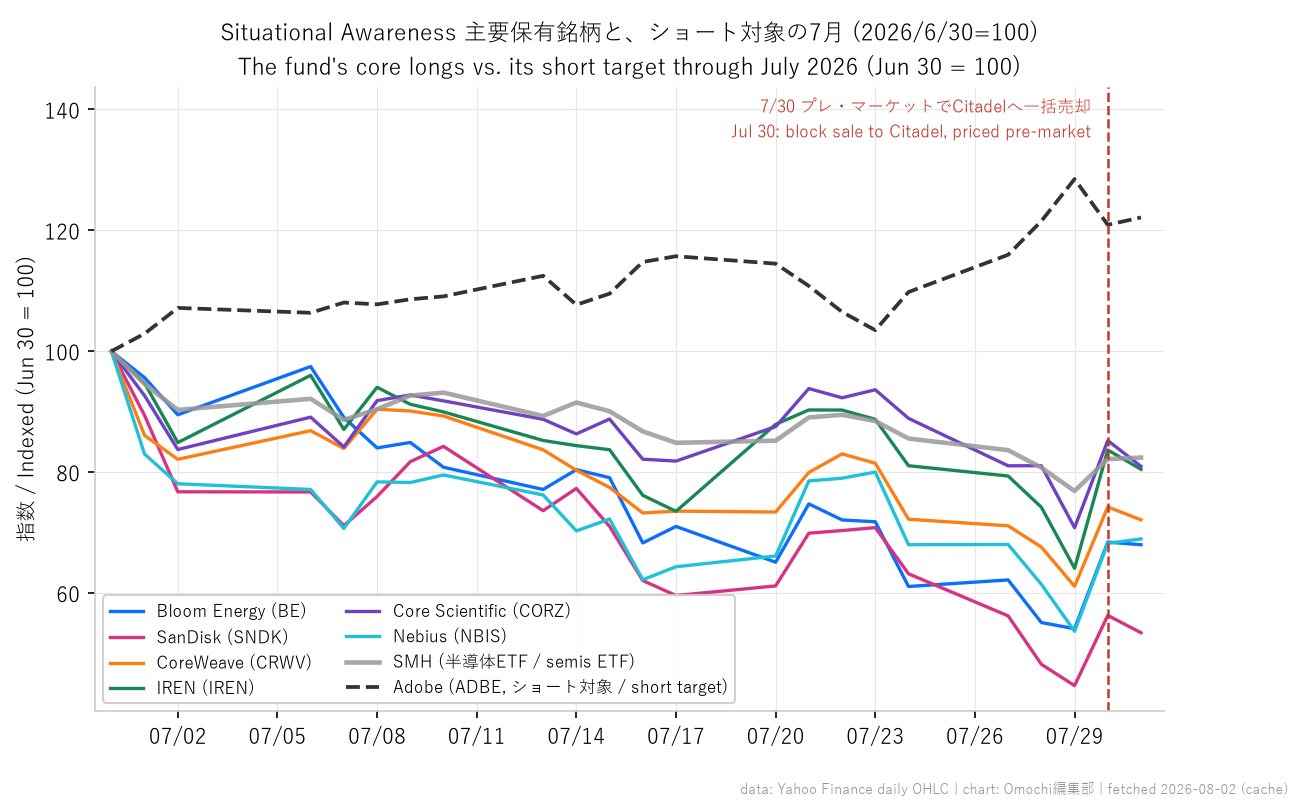
ところで、なぜ「両側」が同時に燃えたのでしょうか。運が悪かったのではありません。ロングとショートが、実は同じ一つの賭けだったからです。このポートフォリオは、「AIの利益は計算インフラに落ち、既存のアプリケーション・ソフトウェアはAIに滅ぼされる」という、あの論文の世界観をそのまま金融商品化したものでした。買いは計算資源、売りはAdobe。表と裏で一枚のコインです。だから世界観への評価が反転した瞬間、両側が同時に逆回転しました。
Why did both sides burn at once? It was not bad luck. The longs and the shorts were, in truth, a single bet. The portfolio was the essay's worldview turned directly into a financial product: AI's profits will accrue to compute infrastructure, and incumbent application software will be destroyed by AI. Long compute, short Adobe. Two faces of one coin. So the moment the market's verdict on that worldview flipped, both sides reversed together.
そして、この賭けの中身そのものを疑う声も出ています。投資家のPorter Stansberry氏は事件後のスレッドで、みんなが敗因をレバレッジだと総括しているが、見落とされているのは「彼が単純に間違っている」可能性だ、と書きました。企業向けソフトウェア会社が売っているのはコードではない、というのです。
And some now question the substance of the bet itself. In a thread after the collapse, investor Porter Stansberry wrote that while everyone blames leverage, what's being missed is the possibility that "he's simply wrong." Enterprise software companies, he argues, are not selling code.
「これらの企業は労働力を売っているのではない。労働がその上を走るレールを売っているのだ(They are selling the rails on which labor runs.)」
"These companies are not selling labor. They are selling the rails on which labor runs."
乗り換えコストが高すぎて剥がせない顧客関係こそが本体であり、コモディティ化するのはむしろ計算インフラの側だ、という読みです。彼は1865年から1873年の鉄道時代を引き合いに出します。線路を敷いた側は財産を失い、その線路の上で荷物と客車を走らせたAdams ExpressやPullmanが栄えた。7月のAdobeの踏み上げは、市場がこの歴史の側にも票を入れ始めたサインだった、と読むこともできるわけです。
The real asset, in this reading, is the customer relationship too expensive to rip out, and it is compute infrastructure that gets commoditized instead. He points to the railroad era of 1865-1873: the men who laid the track lost fortunes, while Adams Express and Pullman, who ran freight and carriages on those rails, prospered. July's squeeze in Adobe can be read as the market starting to cast votes for that side of history too.
なお、この7月の急落の引き金の一つが、7月29日のFOMCに向けて債券金利が急騰し、モメンタム※相場が逆回転したことでした。FRBが利上げを債券市場に「外注」した経緯は、前回の記事差分が唯一のガイダンス。FRBが何もしなかった日に、株もドルも売られた理由で実測しています。
One trigger of the July rout, incidentally, was the surge in bond yields into the July 29 FOMC, which threw the momentum trade into reverse. How the Fed "outsourced" its rate hike to the bond market is something we measured in our previous piece, The Diff Is the Only Guidance: Why Stocks and the Dollar Both Fell on the Day the Fed Did Nothing.
※ モメンタム(momentum)とは、上がっている株がさらに上がり続ける傾向、またはそれに乗る投資手法のことです。乗っている間は快適ですが、逆回転が始まると全員が同じドアに殺到します。
※ Momentum is the tendency of rising stocks to keep rising, and the strategy of riding that tendency. Comfortable while it lasts; when it reverses, everyone rushes for the same door.
株価の急落は、レバレッジをかけたファンドにとって単なる含み損では済みません。プライムブローカー※からのマージンコール※が始まります。Situational Awarenessの場合、それはBank of America、Goldman Sachs、JPMorganの3行でした。追加担保を差し入れられなければ、強制売却です。ファンドは資本調達を試みましたが間に合わず、7月30日のプレ・マーケットで、上場株ポートフォリオ約160億ドル分を、ロングもショートもまとめて一括のブロックトレード※でCitadelに売却しました。入札にはMillennium Managementも参加し、割引率は10%超と報じられています。
For a leveraged fund, a crash in its holdings is never just a paper loss. Margin calls from the prime brokers begin. In Situational Awareness's case those were Bank of America, Goldman Sachs, and JPMorgan. Fail to post additional collateral, and forced liquidation follows. The fund tried to raise capital but ran out of time, and in the pre-market on July 30 it sold its roughly $16 billion public book, longs and shorts together, to Citadel in a single block trade. Millennium Management also bid, and the discount is reported to have exceeded 10%.
※ プライムブローカー(prime broker)とは、ヘッジファンドに資金の貸付、株の貸出、取引の決済をまとめて提供する大手金融機関のことです。ファンドのレバレッジは、実質的にプライムブローカーからの借金で作られています。
※ A prime broker is a major financial institution that provides hedge funds with lending, stock loans, and trade settlement as a package. A fund's leverage is, in practice, built out of loans from its prime brokers.
※ マージンコール(margin call、追証)とは、借入で投資している顧客の担保価値が下がったとき、貸し手が追加の担保を要求することです。応じられなければ、貸し手はポジションを強制的に売却できます。
※ A margin call is the lender's demand for additional collateral when the value of a leveraged client's holdings falls. If the client cannot comply, the lender can forcibly liquidate the positions.
※ ブロックトレード(block trade)とは、大量の株式を市場を通さず、当事者間の相対取引で一括売買することです。市場に直接ぶつけると価格が暴落するような規模の玉を処分するときに使われます。
※ A block trade is a bulk sale of shares negotiated privately between parties rather than on the open market, used to dispose of positions so large they would crash the price if dumped directly.
渦の中心にいた本人はどうしたか。7月31日、彼は投資家への手紙を出しました。書き出しは「今月、私たちはあなた方の期待を裏切りました(We let you down this month)」。ただし読み進めると、手紙はこう続きます。ファンドは清算されていない。7月は監査前の数字でマイナス67%、それでも年初来ではプラス80%。今回の急落は「昨年初め以来、最良の買い場の一つ」であり、8月1日から新規資金の受け入れを再開する。数日後には、カリフォルニア州カーメルで結婚式を挙げると報じられています。渦の中心にいた本人が、誰よりも早く日常に戻る。これは今回の波及を考える上で、実は重要な観測データです。中心にエネルギーが残っていないなら、衝撃は全部、外へ出て行ったことになるからです。
And what of the man at the center of it all? On July 31 he sent a letter to investors. It opens: "We let you down this month." Read on, though, and the letter continues: the fund has not been liquidated. July was minus 67% on unaudited numbers, yet the fund is still up 80% for the year. The selloff is "one of the best buying opportunities since early last year," and the fund will reopen to new capital on August 1. Days later, he is reported to be getting married in Carmel, California. The man at the center of the vortex returns to normal life faster than anyone. For thinking about where this ripples, that is actually an important data point: if no energy remains at the center, all of the shock went outward.
では、どこへ出て行ったのか。ここからが本題です。過去の3つの事件が、考えるための最良の教材になります。
So where did it go? That is the real subject of this article, and three past cases are the best teaching material we have.
ケーススタディ1。Archegos(2021年)。「限定的」から銀行消滅まで、2年
Case Study 1: Archegos (2021). From "Contained" to a Dead Bank in Two Years
一番参考になる前例は、構図がほぼ同じです。2021年3月、Bill Hwang氏のファミリーオフィス※Archegos Capitalが、レバレッジをかけた集中ロングの崩壊で吹き飛びました。今回との違いは道具です。Archegosはトータル・リターン・スワップ※という契約を複数の銀行に分散して張り、誰にも全体像が見えない形で5倍超のレバレッジを積んでいました。崩壊が始まると、各行は他行の持ち高を知らないまま、我先にと担保株を市場に投げ売りしました。早く売れた銀行は逃げ切り、遅れた銀行が焦げ付きを丸ごとかぶった。
The most instructive precedent has almost the same structure. In March 2021, Bill Hwang's family office Archegos Capital blew up when its leveraged, concentrated long book collapsed. The difference lies in the tools. Archegos spread total return swap contracts across multiple banks, stacking up more than 5x leverage in a form nobody could see in full. When the collapse began, each bank, blind to the others' exposure, raced to dump the collateral stock into the market. The banks that sold fast escaped; the ones that lagged ate the entire loss.
※ ファミリーオフィス(family office)とは、大富豪一族の資産だけを運用する私的な運用会社のことです。外部の顧客を持たないため、ヘッジファンドより開示義務がさらに緩くなっています。
※ A family office is a private investment firm managing only one wealthy family's assets. Because it has no outside clients, its disclosure obligations are even lighter than a hedge fund's.
※ トータル・リターン・スワップ(TRS)とは、株を直接保有せずに、その株の値動きによる損益だけを銀行から受け取る契約のことです。保有の名義は銀行に残るため、当時は外部から誰がどれだけ持っているか、ほぼ見えませんでした。
※ A total return swap (TRS) is a contract that delivers the gains and losses of a stock's price moves without owning the stock itself; the bank stays the holder of record. At the time, this made it nearly impossible for outsiders to see who held how much.
初日の市場の判定は「限定的」でした。実際、株式市場全体はほぼ無傷で通過しています。しかし波及は、市場ではなく銀行の内部を、ゆっくり進んでいました。逃げ遅れたCredit Suisseの損失は55億ドル。同行史上最大のトレーディング損失です。直前に発覚したGreensill問題と重なり、「リスク管理が壊れた銀行」という認識が市場に定着しました。そこから顧客流出と経営混乱が2年続き、2023年3月、預金流出が止まらなくなったCredit Suisseはスイス政府の仲介でUBSに救済買収され、167年の歴史が消えました。野村ホールディングスも約29億ドルを失っています。
The market's day-one verdict was "contained." And indeed, the broader stock market passed through nearly unscathed. But the ripple was advancing slowly, not through the market, through the inside of a bank. Credit Suisse, too slow to sell, lost $5.5 billion, the largest trading loss in its history. Coming right after the Greensill scandal, it cemented the market's perception of a bank whose risk management was broken. Two years of client outflows and management turmoil followed, and in March 2023, with deposits fleeing uncontrollably, Credit Suisse was rescued into a takeover by UBS brokered by the Swiss government. One hundred sixty-seven years of history, gone. Nomura Holdings lost roughly $2.9 billion of its own.
この事件の波及には、出来すぎた結末があります。2023年7月、Archegosを巡るリスク管理の不備に対して総額3.87億ドルの罰金が当局から科されました。宛先はUBS。罰金が届いたとき、受取人であるはずの銀行は、もうこの世に存在していなかったのです。
The ripple from this case has an ending almost too perfect. In July 2023, regulators levied $387 million in fines over the risk-management failures around Archegos. The addressee: UBS. By the time the fine arrived, the bank it was meant for no longer existed.
記録しておきましょう。波及経路は銀行のバランスシート。到達まで2年。初日の「限定的」は間違いではなく、単に経路を見ていなかっただけでした。
For the record: the ripple channel was bank balance sheets. Time to arrival, two years. The day-one "contained" wasn't wrong; it simply wasn't looking at the channel.
ケーススタディ2。ゲームストップ(2021年)
Case Study 2: GameStop (2021)
同じ2021年の1月、もう一つの事件が起きています。個人投資家の集団が、Roaring KittyことKeith Gill氏に率いられて、ゲームストップ株を空売りしていたヘッジファンドMelvin Capitalを踏み上げた騒動です(顛末は映画Dumb Moneyが痛快に描いています)。追い詰められたMelvinには、CitadelとPoint72が27.5億ドルの救済出資をしました。
January of that same 2021 produced another case: a crowd of retail investors, led by Keith Gill, better known as Roaring Kitty, squeezed the hedge fund Melvin Capital out of its GameStop short (the movie Dumb Money tells the story with great relish). Citadel and Point72 injected $2.75 billion to rescue the cornered Melvin.
初日の判定は「個人投資家の奇妙な祭り」。しかし本当の事件は、誰も見ていなかった市場の配管で起きていました。1月28日の早朝5時11分、証券会社Robinhoodは清算機関※から37億ドルの追加担保を要求されます。手元にあったのは7億ドル。期限は午前10時。資金をかき集めても間に合わず、同社はゲームストップ株の「買い」だけを無効化しました。売りは許して、買いは止める。個人投資家の攻勢が人為的に止められたこの瞬間は国会公聴会の主題になり、「Citadelが裏で止めさせたのではないか」という疑惑まで生まれました(この疑惑は現在まで証明されておらず、裁判所も陰謀の証拠なしと判断しています)。
The day-one verdict: a strange retail carnival. But the real event was happening in the market's plumbing, where nobody was looking. At 5:11 on the morning of January 28, the brokerage Robinhood was ordered by the clearinghouse to post $3.7 billion in additional collateral. It had $700 million on hand. The deadline was 10 a.m. Unable to scrape together enough in time, the company disabled the buy button, and only the buy button, for GameStop. Selling allowed, buying blocked. The moment the retail offensive was artificially halted became the subject of congressional hearings, and spawned the suspicion that Citadel had pulled strings behind the scenes (a suspicion that remains unproven to this day; courts found no evidence of collusion).
※ 清算機関(クリアリングハウス)とは、株の売買の受け渡しを保証する市場の裏方組織のことです。取引が決済されるまでの数日間のリスクに応じて、証券会社に担保を要求します。平時は誰も意識しませんが、危機のときに市場の実権を握るのはここです。
※ A clearinghouse is the behind-the-scenes organization that guarantees the delivery of every stock trade. It demands collateral from brokerages in proportion to the risk carried during the days before trades settle. In calm times nobody thinks about it; in a crisis, this is where the real power over the market sits.
波及は、それから何年もかけて進みました。救済されたはずのMelvin Capitalは損失から立ち直れず、16ヶ月後の2022年5月に閉鎖。米国の株式決済は、あの担保騒動の反省からT+1(翌日決済)へと短縮されました。そしてもう一つ、お金に換算できない波及があります。市場は「見えているポジションは、追い詰められれば狩れる」ことを学習しました。Melvinの空売りは開示データで丸見えだったからこそ、群衆に狩られたのです。この学習が、5年後のアッシェンブレナー氏に返ってきます。彼のロングの中身も、13Fで丸見えでした。ちなみに先頭にいたGill氏自身は、2019年に約5.3万ドルで始めたポジションを、2024年の再登場時には約2.6億ドルにまで育てています。
The ripple then took years to play out. Melvin Capital, rescue and all, never recovered from its losses and shut down sixteen months later, in May 2022. US stock settlement was shortened to T+1, next-day settlement, as a direct lesson of that collateral scramble. And there was one more ripple that no dollar figure captures: the market learned that a visible position, once cornered, can be hunted. Melvin's short was hunted by the crowd precisely because disclosure data laid it bare. Five years later, that lesson came back around to Mr. Aschenbrenner, whose longs were laid just as bare in his 13F. As for Gill himself, the man at the front of the crowd grew a position he started with about $53,000 in 2019 into roughly $260 million by his 2024 reappearance.
記録します。波及経路は決済インフラと制度、そして市場参加者の学習。到達まで1年から3年。
For the record: the ripple channels were settlement infrastructure, regulation, and what market participants learned. Time to arrival, one to three years.
ケーススタディ3。LTCM(1998年)。救済そのものが、次のバブルの経路になった
Case Study 3: LTCM (1998). The Rescue Itself Became the Next Bubble's Channel
最後に、教科書で最も研究されてきた参照点を置きます。1998年のLTCM。ノーベル賞受賞者2人を擁し、「天才が運用するファンド」の元祖と呼ばれた同社は、25倍を超えるレバレッジでロシア危機に突っ込み、4ヶ月で資本のほぼ全てを失いました。ウォール街中の銀行が同じ取引を抱えていたため、初日の恐怖は「システム全体の崩壊」でした。FRBが仲介に入り、大手14社が36億ドルの共同救済で崩壊を止めます。
Finally, the reference point the textbooks have studied most: LTCM, 1998. Boasting two Nobel laureates and known as the original "fund run by geniuses," it drove into the Russian crisis carrying more than 25x leverage and lost essentially all of its capital in four months. Because every bank on Wall Street carried the same trades, the day-one fear was the collapse of the entire system. The Fed brokered a rescue, and fourteen major firms halted the collapse with a $3.6 billion joint bailout.
システム崩壊は回避されました。ではLTCMの波及はゼロだったのか。教科書が強調するのは、その後です。市場を落ち着かせるためにFRBは矢継ぎ早の利下げを行い、この緩和マネーが翌1999年のITバブル最終局面の燃料になった、という評価が今では標準的です。つまりLTCMの本当の波及は、罰の形ではなく、救済の副作用の形で届きました。危機を止めた薬が、次のバブルの点火剤になる。波及は、教訓の反対側から来ることもあるのです。
Systemic collapse was averted. So was LTCM's ripple zero? What the textbooks emphasize is what came next. To calm the market, the Fed cut rates in rapid succession, and the standard assessment today is that this easy money became fuel for the final leg of the dot-com bubble in 1999. LTCM's true ripple arrived not as punishment but as a side effect of the rescue. The medicine that stopped the crisis became the igniter of the next bubble. Ripples can arrive from the opposite side of the lesson.
記録します。波及経路は金融政策と投資家心理。到達まで18ヶ月から2年。
For the record: the ripple channels were monetary policy and investor psychology. Time to arrival, eighteen months to two years.
今回。教科書の経路は、すべて塞がっていた
This Time, Every Textbook Channel Was Sealed
この3つの物差しを当てると、今回の事件の特異さがはっきりします。ZeroHedgeは今回を「Archegos 2.0」と呼びましたが、実測する限り、経路はむしろ逆向きに設計されていました。
Hold these three yardsticks up to the current case and its strangeness comes into focus. ZeroHedge called it "Archegos 2.0," but as far as the data shows, the channels were engineered in the opposite direction.
まず銀行の経路。Situational AwarenessのレバレッジはTRSではなく、通常のプライムブローカー経由の信用取引でした。つまり3行は担保の中身を毎日値洗いして見ていた。だからマージンコールは、ファンドの自己資本が尽きる前に早めに飛びました。Archegosの経路は、Archegosの教訓によって塞がれていたわけです。次に投げ売りの経路。処分は各行の投げ売り競争ではなく、体力のある一人の買い手への一括売却で済みました。本稿執筆時点で、3行のいずれも損失を公表していません。
First, the bank channel. Situational Awareness's leverage ran not through TRS but through ordinary prime-broker margin lending, which means all three banks were marking the collateral to market daily and could see inside it. So the margin calls went out early, before the fund's own capital was exhausted. The Archegos channel had been sealed by the Archegos lesson. Next, the fire-sale channel: disposal happened not as a race between banks dumping stock, but as a single bulk sale to one deep-pocketed buyer. As of this writing, none of the three banks has disclosed a loss.
そして市場の経路。ここは実測データがはっきり答えを出しています。ファンドの主力銘柄の底は、すべて7月29日。Citadelが買った前日です。強制売り手の消滅を確認した瞬間、7月の暴落は終わりました。売却当日、当該銘柄は8%から18%反発し、セクター全体の2倍から4倍の強さで戻っています。踏み上げられていたAdobeも、7月29日の高値を最後に反落しました。半導体市場から約3兆ドルが消えた急落の、少なくとも最終局面のかなりの部分は、「AIの死」ではなく「一人の強制売り手」だったことを、値動き自体が証言しています。
Then the market channel, where the measured data gives an unambiguous answer. Every one of the fund's core holdings bottomed on July 29, the day before Citadel bought. The moment the market confirmed the forced seller was gone, July's crash was over. On the day of the sale the names rebounded 8% to 18%, two to four times harder than the sector, and Adobe, which had been squeezed upward, peaked on July 29 and fell back. The price action itself testifies that a substantial part of the rout that erased some $3 trillion from semiconductor stocks, at least in its final phase, was not the death of AI but one forced seller.
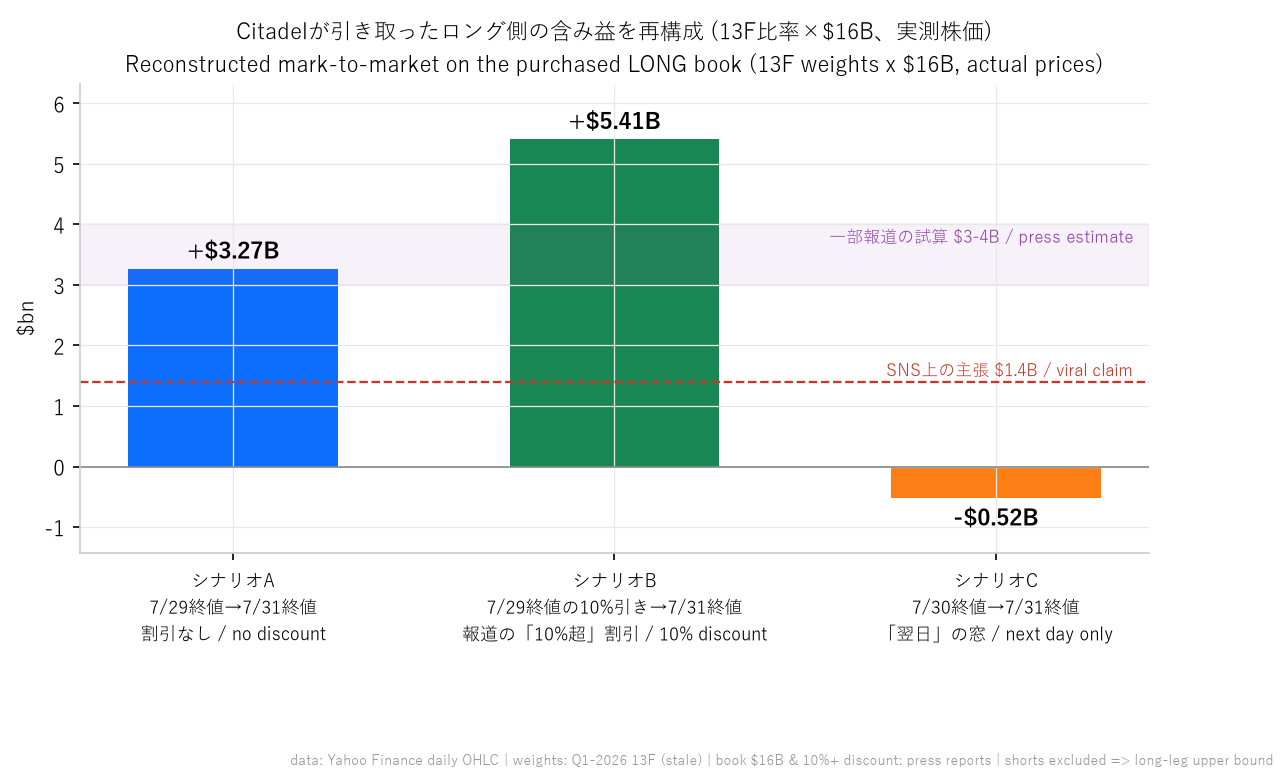
買い手の側も検算しておきましょう。SNSで最も拡散した主張はこうです。「CitadelはAschenbrennerのポートフォリオを買い、翌日に14億ドル儲けた」。
Let's also check the math on the buyer's side. The most viral claim on social media goes: "Citadel bought Aschenbrenner's portfolio and made $1.4 billion on it the next day."
Leopold Aschenbrenner was nearly liquidated and sold his portfolio to Citadel - here's full 7-page PDF of what Ken Griffin bought
the twist: Griffin made $1.4 billion on it the next day
here's what he bought:
Nebius → $1.84B → $2.34B (+$499M)
SanDisk → $1.16B → $1.46B
text-ja: レオポルド・アッシェンブレナーは清算寸前まで追い込まれ、ポートフォリオをCitadelに売却した。ケン・グリフィンが買ったものの7ページのPDFがこれだ。オチ:グリフィンは翌日それで14億ドル儲けた。買ったのは:Nebius 18.4億ドル→23.4億ドル(+4.99億ドル)、SanDisk 11.6億ドル→14.6億ドル
13Fの銘柄比率を報道の約160億ドルのブックに引き直し、実際の株価で検算すると、結果は主張より奇妙でした。まず「翌日」は間違いです。売却翌日の7月31日、当該銘柄群は小幅に下げており、翌日だけならブック全体でマイナス約5億ドル。儲けが出たのは「当日」です。前日終値を取得原価と仮定した控えめな計算で約33億ドル、報じられている10%超の割引で買えていたなら約54億ドル。拡散した数字は、日付が1日ずれている上に、おそらく過小です(ショート側の逆風を含まないロング側だけの概算です)。
Rebuilding the book from the 13F weights scaled to the reported $16 billion and running actual prices through it, the result is stranger than the claim. First, "the next day" is wrong. On July 31, the day after the sale, the names slipped modestly; measured over that day alone, the book lost about $0.5 billion. The profit came on the day itself. On the conservative assumption that the purchase was priced at the prior day's close, the mark-to-market gain through Friday's close is about $3.3 billion; if Citadel got the reported 10%-plus discount, about $5.4 billion. The viral number is off by a day, and probably an underestimate (this is a long-side-only approximation that ignores the headwind on the shorts).
Citadel Securitiesが売却の3日前に「サプライズ利上げは市場の浄化になる」という分析を公表していた事実もあり、SNSでは意図を疑う読み方も拡散しました。ただ、因果関係は証明できませんし、Citadelは2月にはAI悲観論に公開反論して「暴落を防ぐ側」にも立っています。確かなのは構図だけです。市場が壊れた瞬間に、壊れた資産をまとめて引き受けられる巨大なバランスシートを持つ者は、他人の破綻を自分の仕入れに変換できる。2021年は救済出資という形で、2026年は割引価格の一括買収という形で。そして今回、金融システムの最後の安全網として機能したのは、FRBでも銀行団でもなく、一民間ヘッジファンドの買い余力でした。システムが守られたことと、システムが健全であることは、同じではありません。次に壊れるファンドがもっと大きかったとき、あるいはCitadelが買いたくないと言ったとき、誰が受け皿になるのでしょうか。
The fact that Citadel Securities had published an analysis three days before the sale arguing that a surprise rate hike would be a "cleansing event" for markets fed a wave of insinuation online. But causation can't be proven, and in February Citadel had publicly pushed back against AI doomsaying, standing on the crash-prevention side. What is certain is only the structure: whoever holds a balance sheet big enough to absorb broken assets in bulk at the moment the market breaks can convert someone else's ruin into their own inventory. In 2021, in the form of a rescue investment; in 2026, in the form of a discounted bulk purchase. And this time, the financial system's last safety net was neither the Fed nor a bank consortium but the buying power of one private hedge fund. That the system was protected and that the system is healthy are not the same thing. When the next fund to break is bigger, or when Citadel says it doesn't want the book, who catches it?
ここまでが「初日の判定」の中身です。教科書の経路は塞がれていた。ではArchegosやゲームストップのような波及は、今回は本当にないのか。3つのケーススタディが教えてくれるのは、波及は封鎖された経路ではなく、開いている経路を探して進む、ということです。そして今回、開いている経路は少なくとも3つあります。
That is the full content of the day-one verdict: the textbook channels were sealed. So is there truly no Archegos-style or GameStop-style ripple this time? What the three case studies teach is that ripples do not travel the sealed channels; they find the open ones. And this time, at least three are open.
開いている経路その1。同じトレードは、世界中に積まれている
Open Channel 1: The Same Trade Is Stacked Up All Over the World
一つ目の経路は最も古典的です。LTCMのとき、危機を増幅したのは「全員が同じ取引を持っていた」ことでした。今回のAIモメンタム・トレードも同じです。しかも、この経路はすでに着弾実績があります。
The first channel is the most classic. What amplified the LTCM crisis was that everyone held the same trades. Today's AI momentum trade is no different. And this channel already has confirmed hits.
実は今回の連鎖で最初に倒れたのは、有名ファンドではなく個人投資家でした。韓国です。AI半導体ブームでSamsungとSK hynixを信用取引で買い上がっていた韓国の個人投資家は、7月中旬のKOSPI急落で先にやられました。現地報道によれば、7月13日までに120万の信用取引口座がマージンコールを受け、32万超の口座が強制清算。損失は約21.5兆ウォン、日本円で2兆円規模です。韓国銀行は同日、3年ぶりの利上げに踏み切りました。アッシェンブレナー氏の破綻は、この同じ波の、2週間遅れの、より大きな一撃だったわけです。
In fact, the first to fall in this chain was not a famous fund but retail investors, in South Korea. Korean individuals who had been buying Samsung and SK hynix on margin through the AI semiconductor boom were taken out first by the mid-July KOSPI plunge. According to local reports, by July 13 some 1.2 million margin accounts had received margin calls and over 320,000 accounts had been forcibly liquidated, with losses around 21.5 trillion won, roughly two trillion yen. The Bank of Korea raised rates the same day for the first time in three years. Mr. Aschenbrenner's collapse was the same wave arriving two weeks later, as a bigger strike.
そして波はまだ残っています。Goldman Sachsのプライムブローカー部門のデータでは、ヘッジファンドは7月、記録的なペースでテック株を売り、大型テックへのグロス・ネット両方の持ち高を切り下げました。業界紙は「レバレッジの高いAIポートフォリオを持つ複数のファンドにマージンコールが出ている」と報じています。All-Inポッドキャストでこの事件を扱った回で、投資家のDavid Sacks氏はバフェットとマンガーの古い格言を引きました。「賢い人間が破産する方法は、レバレッジだけだ」。レバレッジがなければ同じポートフォリオでも7月の下げは20%から30%の含み損で済んでいた。そしてSacks氏はもう一つ、重要な区別を指摘しています。このファンドの初期の出資者は今回の崩壊を食らってもまだ大きなプラス圏にいる。壊滅したのは、439%という数字が報じられてから駆け込んだ「ホットマネー」だ、と。同じトレードの経路で次に倒れる候補も、同じ場所にいます。数字を見てから、レバレッジをかけて、遅れて乗った資金です。
And the wave is not spent. Goldman Sachs prime brokerage data shows hedge funds sold tech at a record pace in July, cutting both gross and net exposure to megacap tech. Trade publications report margin calls going out to multiple funds running highly leveraged AI portfolios. On the All-In podcast episode covering the collapse, investor David Sacks reached for the old Buffett and Munger line: leverage is the only way a smart person can go broke. Without leverage, the same portfolio would have ended July down 20 to 30 percent on paper. And Sacks drew one more distinction that matters: the fund's early investors are still well in the black even after this collapse. What was wiped out was the hot money that rushed in after the 439% number hit the headlines. The next candidates to fall along this channel are sitting in the same seat: money that saw the number, added leverage, and boarded late.

開いている経路その2。同じ資産が、値札のないまま眠っている
Open Channel 2: The Same Asset Is Sleeping Without a Price Tag
二つ目の経路は、今回いちばん報じられていない部分です。
The second channel is the least reported part of this story.
思い出してください。ファンドの最大の含み益資産であるAnthropic株、約50億ドル分は、今回の強制売却の対象外でした。理由は単純で、非上場だから毎日の値札がなく、担保として売りようがなかったからです。報道によれば、ファンドは5月のAnthropicの資金調達ラウンドに参加しており、そのときの企業評価額は9,650億ドル。この値札は、7月の暴落を一度も通過していません。
Recall: the fund's biggest winning asset, roughly $5 billion of Anthropic stock, was untouched by the forced sale. The reason is simple. It is unlisted, carries no daily price, and could not be sold off as collateral. By press accounts, the fund participated in Anthropic's May funding round, which valued the company at $965 billion. That price tag has never once passed through July's crash.
ここに今回の事件の、静かで巨大な含意があります。7月に再評価されたのは、AIトレードのうち「毎日値段がつく部分」だけでした。SanDiskはマイナス55%、Nebiusはマイナス46%という再評価を受けた。しかし同じAIの未来に賭けた私募株の値札は、世界中のファンドや年金の帳簿の上で、5月や6月の高値のまま眠っています。公開市場と私募市場が同じ資産を見ているのに、片方だけが再評価済みという状態です。
Here lies the quiet, enormous implication of this event. What got repriced in July was only the portion of the AI trade that carries a daily price. SanDisk took a 55% markdown; Nebius took 46%. But the price tags on private stakes betting on the same AI future are still asleep at their May and June highs, on the books of funds and pensions around the world. Public and private markets are looking at the same asset, and only one of them has been repriced.
この値札が現実と照合される日は、カレンダーに書いてあります。AnthropicとOpenAIの株式公開です。私たちは以前の記事影の決算書。SpaceXの初決算は、8月4日を待たなくても読めますで、非公開企業の実力が公開市場の周辺データから先に読めることを書きました。今回はその逆が起きます。公開市場がすでに出した再評価が、IPOの値決めを通じて、私募の帳簿に遅れて届くのです。Archegosの波及が銀行の四半期決算のペースで進んだように、この波及はIPOカレンダーのペースで進みます。
The day that price tag gets checked against reality is already on the calendar: the public listings of Anthropic and OpenAI. In an earlier piece, The Shadow Financials: You Don't Have to Wait for August 4 to Read SpaceX's First Earnings, we wrote about how a private company's real performance can be read early from public-market data around it. This time the reverse happens: the repricing the public market has already delivered will reach private books, late, through IPO pricing. Just as the Archegos ripple advanced at the pace of bank earnings seasons, this one advances at the pace of the IPO calendar.
開いている経路その3。物語そのものが、再評価され始めた
Open Channel 3: The Story Itself Is Being Repriced
三つ目の経路は、株価ではなく物語です。
The third channel runs not through stock prices but through the story.
このファンドは、ただのAI関連ファンドではありませんでした。「AGIは2027年に来る」という物語の、金融市場における旗艦です。その旗艦が、AGIの2年前とされた年に、AI株の下げで沈んだ。物語への信頼は、こういう象徴的な出来事で削られていきます。
This was never just another AI fund. It was the financial markets' flagship for the story that AGI arrives in 2027. And the flagship sank, in an AI stock selloff, in the year said to be two years before AGI. Faith in a story erodes through symbolic events exactly like this one.
象徴は他にも重なりました。ファンドが燃えていたのと同じ週、OpenAIとAnthropicの現役社員1,100人超が「Pacing the Frontier」という公開書簡に署名し、両社の経営陣もこれを支持しました。フロンティアAIの開発ペースを意図的に調整できる国際的な仕組みを作るべきだ、という内容です(今すぐ減速しろという要求ではありません。ただ、作り手たちが「ブレーキの設計図が要る」と公式に言い始めたのは初めてです)。加速に全額を賭けたファンドの破綻と、加速の当事者たちによるペース調整の提案が、同じ週に並んだわけです。
Other symbols piled up in parallel. The same week the fund was burning, more than 1,100 current employees of OpenAI and Anthropic signed an open letter titled "Pacing the Frontier," and both companies' leadership backed it. Its ask: build international machinery capable of deliberately pacing frontier AI development (not a demand to slow down now; but it is the first time the builders themselves have formally said the brake needs a blueprint). The bankruptcy of a fund that bet everything on acceleration, and a pacing proposal from the accelerators themselves, landed side by side in the same week.
そしてStansberry氏の「レール論」が正しければ、これは一時の急落ではなく、AIの利益の在り処についての長い再評価の始まりです。計算インフラからソフトウェアへ、加速の物語から選別の物語へ。この経路の波及は、四半期決算でも規制でもなく、数年がかりの設備投資計画と資金調達の条件を通じて、ゆっくり進みます。LTCMの波及が18ヶ月かけてITバブルに届いたのと、同じ時間感覚です。
And if Stansberry's rails thesis is right, this is not a passing selloff but the start of a long repricing of where AI's profits actually live: from compute infrastructure toward software, from a story of acceleration to a story of selection. The ripple along this channel moves slowly, not through quarterly earnings or regulation, but through multi-year capex plans and financing terms. The same clock on which LTCM's ripple took eighteen months to reach the dot-com bubble.
波紋カレンダー。初日の判定と、実際の波及
The Ripple Calendar: Day-One Verdicts vs. What Actually Happened
ここまでを一枚の表にします。
Here is all of the above in one table.
| 事件 | 初日の判定 | 実際の波及 | 到達までの時間 | 経路 |
|---|---|---|---|---|
| Archegos(2021) | 「限定的」 | Credit Suisse消滅(2023年3月)。罰金3.87億ドルは銀行消滅後に到着 | 2年 | 銀行のバランスシート |
| ゲームストップ(2021) | 「個人の祭り」 | 買いボタン事件、公聴会、Melvin閉鎖(2022年5月)、決済のT+1化 | 1〜3年 | 決済インフラ・制度・市場の学習 |
| LTCM(1998) | 「システム危機寸前」 | 救済→利下げ→ITバブル最終局面の燃料に | 18ヶ月〜2年 | 金融政策と投資家心理 |
| Situational Awareness(2026) | 「波及なし。システムは機能」 | ? | ? | 開いているのは、同じトレード・値札のない私募・物語の3経路 |
| Case | Day-One Verdict | Actual Ripple | Time to Arrival | Channel |
|---|---|---|---|---|
| Archegos (2021) | "Contained" | Credit Suisse gone (Mar 2023); the $387M fine arrived after the bank ceased to exist | 2 years | Bank balance sheets |
| GameStop (2021) | "A retail carnival" | The buy-button affair, congressional hearings, Melvin shut (May 2022), T+1 settlement | 1-3 years | Settlement plumbing, rules, market learning |
| LTCM (1998) | "Near-systemic crisis" | Rescue, then rate cuts that fueled the dot-com finale | 18 months-2 years | Monetary policy and psychology |
| Situational Awareness (2026) | "No contagion. The system worked" | ? | ? | Three channels open: the same trade, unpriced private stakes, the story |
最終行の「?」を埋めるためのウォッチリストも置いておきます。プライムブローカー各行がAI関連ポートフォリオに課す証拠金条件。AI特化ファンド各社の月次レター。私募AI株のセカンダリー取引価格。AnthropicとOpenAIのIPO日程。そして9月のFOMC。この5つのどれかが動いた日が、次の波紋の日付です。
A watchlist for filling in that final row of question marks: the margin terms prime brokers set on AI-heavy portfolios; the monthly letters of AI-focused funds; secondary-market prices for private AI shares; the IPO timelines of Anthropic and OpenAI; and the September FOMC. The day any one of those five moves is the date of the next ripple.
編集部の見立て
Our Take
波及は、経路の速度でしか進みません。銀行経由なら四半期決算ごとに、制度経由なら公聴会と規則改正のペースで、心理経由なら次のバブルが膨らむ速度で。今回、最速の経路である銀行ルートは、Archegosの教訓によって見事に塞がれていました。だから初週が静かだったのです。しかし残っている3つの経路は、どれも足の遅い経路です。同じトレードの巻き戻しは月次レターのペースで、私募の値札はIPOカレンダーのペースで、物語の修正は設備投資計画のペースで進みます。
A ripple can only move at the speed of its channel. Through banks, it moves one earnings season at a time; through regulation, at the pace of hearings and rule changes; through psychology, at the speed of the next bubble inflating. This time the fastest channel, the bank route, was sealed beautifully by the Archegos lesson. That is why the first week was quiet. But the three channels still open are all slow ones: the unwinding of the crowded trade moves at the pace of monthly letters, private price tags at the pace of the IPO calendar, and the revision of the story at the pace of capex plans.
つまり、静かなのは「波及がない」ことの証拠ではなく、「まだ来ていない」ことの証拠です。
Which means the silence is not evidence that there is no ripple. It is evidence that it has not arrived yet.
持ち帰りは3つあります。第一に、破綻ニュースの読み方です。「限定的」という初日の判定は、Archegosでもゲームストップでも出ていました。あの言葉は、どの経路を点検した上で言っているのかとセットでなければ意味を持ちません。第二に、中心の静けさに安心しないことです。今回は渦の中心にいた本人が1週間で日常に戻り、ファンドは8月1日から新しい資金の受け入れさえ再開しました。エネルギーは中心に残っていない。つまり全部、外に出ています。第三に、これは個人投資家に直接関係する話ですが、自分が持つAI関連の資産を「毎日値札がつくもの」と「つかないもの」に分けてみてください。7月に再評価されたのは前者だけです。後者の再評価日は消えたのではなく、カレンダーにまだ載っていないだけです。
Three takeaways. First, how to read blowup news: the day-one "contained" verdict was issued for Archegos and for GameStop too. The word means nothing unless it comes attached to a list of which channels were actually inspected. Second, don't be reassured by calm at the center. This time the man at the center of the vortex was back to normal life within a week, and the fund even reopened to new money on August 1. No energy remains at the center, which means all of it went outward. Third, and this one concerns individual investors directly: sort your own AI-related holdings into things that get a price tag every day and things that don't. Only the former were repriced in July. The repricing date for the latter hasn't disappeared. It just isn't on the calendar yet.
事件の記事は事件の日に読まれますが、役に立つのは次の波紋が届く前です。この記事が、その点検表になれば幸いです。なお幸いなことに、今夜の夕食の店選びに波及リスクはありません。誰かの物語ではなく、実際に行った人の記録で店を選ぶ。私たちはそのためのアプリを作っています。
Articles about an event get read on the day of the event, but they earn their keep before the next ripple lands. We hope this one serves as that checklist. Happily, tonight's dinner choice carries no contagion risk. Choose the restaurant not by someone's story, but by the records of people who actually went. We build the app for that.
Situational Awareness Assets Drop to $10 Billion After Liquidations(Bloomberg)
Citadel Buys Bulk of Situational Awareness' AI Stock Wagers(Bloomberg)
AI investor Leopold Aschenbrenner forced to unwind all public stock positions after steep losses, sources say(CNBC)
How Leopold Aschenbrenner built a $45 billion AI hedge fund — and lost most of it in days(CNBC)
Citadel buys bulk of Situational Awareness portfolio after AI stock losses: WSJ(Yahoo Finance)
AI hedge fund Situational Awareness may have sold its public portfolio, but it still has its Anthropic shares(TechCrunch)
Anatomy of a Margin Call: How Situational Awareness LP Unwound a $20 Billion AI Book in One Trade(SpotGamma)
'We let you down this month:' Read Leopold Aschenbrenner's letter to investors after his fund lost 67% this month(Fortune)
The power couple of AI is getting married in Carmel, days after groom Leopold Aschenbrenner's hedge fund nearly blew up(Fortune)
Chip stocks shed more than $1 trillion as selloff hits companies powering AI boom(CNBC)
UBS hit with $387 million in fines for 'misconduct' by Credit Suisse in Archegos dealings(Fortune)
GameStop trading nearly destroyed Robinhood(Quartz)
Melvin Capital, hedge fund torpedoed by the GameStop frenzy, is shutting down(CNBC)
Roaring Kitty's GameStop stake grows to 9 million shares after selling his big options position(CNBC)
Near Failure of Long-Term Capital Management(Federal Reserve History)
Hedge funds face margin calls amid AI stock sell-off(Hedgeweek)
South Korea's Margin Loan Crisis: 1.2 Million Accounts Hit(The Eastern Herald)
Chip Stocks Crash, $20B Fund Margin Called, Frontier Labs: SLOW DOWN AI, Mamdani's Grocery Stores(All-In Podcast)
Employees from the world's biggest AI companies want the US to be ready to slow AI development(CNN Business)
What Everyone Missed In Leo's Blow-Up(Porter Stansberry (X))
Citadel Takes Over AI Portfolio Days After Citadel Securities' Rate-Hike Call(The Deep Dive)
'Situational Bewareness': Star AI Investor Dumps Assets To Citadel After Massive Levered Bets Blow Up(ZeroHedge)
免責事項: 本記事は情報提供を目的としたものであり、特定の金融商品の売買を推奨するものではありません。投資に関する最終的な決定は、ご自身の判断と責任で行ってください。記載の情報は執筆時点のものであり、その正確性・完全性を保証するものではありません。
Disclaimer: This article is for informational purposes only and does not constitute a recommendation to buy or sell any financial instrument. Investment decisions are your own responsibility. Information is current as of the time of writing and its accuracy and completeness are not guaranteed.