本当に守られたのは米国債。ベッセント長官が広げたい「FIMAレポ」という蛇口
What Was Really Protected Was the Treasury Market. The FIMA Repo Tap Bessent Wants Widened
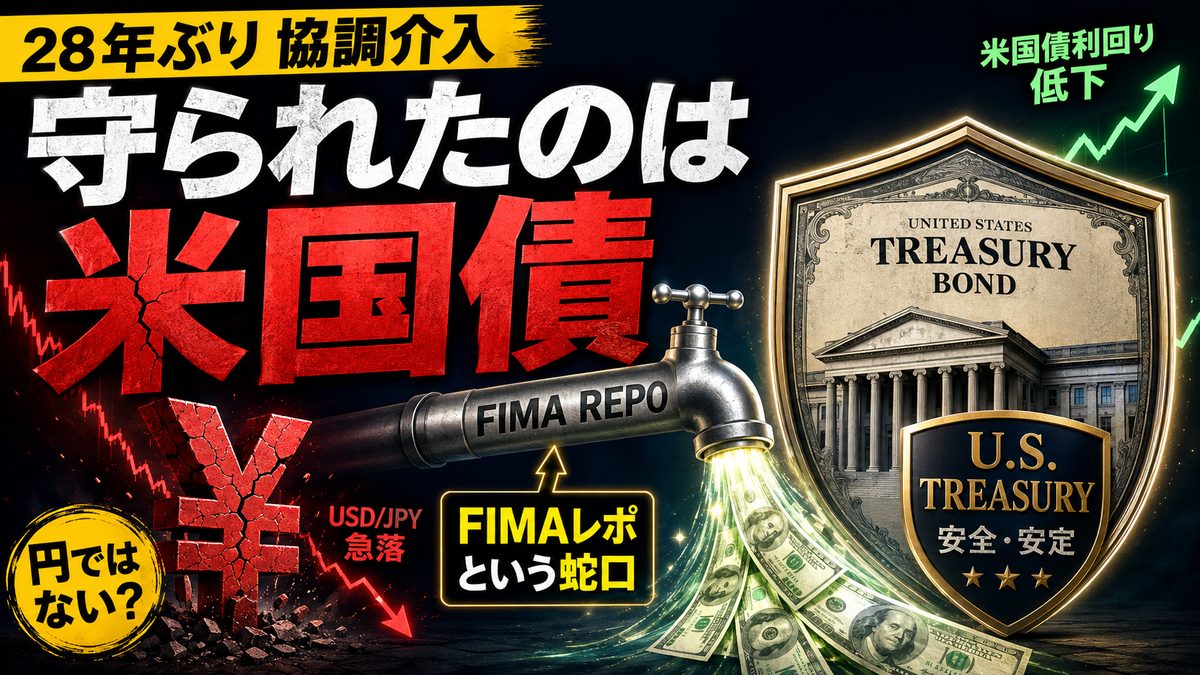
7月最後の週、為替市場で三つのことが立て続けに起きました。まず7月30日、日本の通貨当局が「推定」8.45兆円という、1日としては過去最大の円買い介入を実施しました。翌31日には米財務省がこれに加わり、日米の協調介入となりました。片山財務相は「今後も躊躇なく協調介入を行う」と明言。円買いでの日米共同作戦は、実に1998年以来28年ぶりです。そして週が明けた8月3日、ベッセント米財務長官がロイターのインタビューで、ほとんどの人が聞いたこともない設備の名前を口にしました。「FIMAレポ・ファシリティは重要なバックストップだ。今後数ヶ月で上限を引き上げるよう促したい」。
In the last week of July, three things happened in the currency market in rapid succession. On July 30, Japan's authorities executed an estimated 8.45 trillion yen of yen-buying intervention, the largest single day on record. The next day, July 31, the US Treasury joined in, making it a coordinated US-Japan operation. Finance Minister Satsuki Katayama declared Japan "will not hesitate to conduct further joint intervention." A joint US-Japan yen-buying operation had not happened since 1998, twenty-eight years ago. Then, on Monday August 3, Treasury Secretary Scott Bessent named, in a Reuters interview, a facility most people have never heard of: "The FIMA Repo Facility is an important backstop. We should encourage it to be upsized in the coming months."
介入のニュースは大きく報じられました。しかしこの「FIMAレポ」の一言は、何となくSNSで目にするが理解されていないというのが実際のところです。既に今回の円買い介入は実際のところ円を守るためじゃなく、米国債市場を守るためだったとも言われています。何故そう言われるのかにこのFIMAレポの話は大きく関係してきます。順番に見ていきます。
The intervention itself made headlines everywhere. But the phrase "FIMA repo" is something people vaguely see on social media without understanding what it means. Some are already arguing that this yen-buying intervention was never really about defending the yen at all, but about defending the US Treasury market. Why would anyone say that? The FIMA repo is central to the answer. Let us take it step by step.
まず「レポ」とは何か。質屋だと思ってください
First, What Is a Repo? Think of a Pawn Shop
FIMAレポを理解するのに、金融の専門知識は要りません。駅前の質屋を思い浮かべてください。
You do not need a finance degree to understand the FIMA repo. Picture the pawn shop by the station.
腕時計を質屋に預けると、現金を借りられます。時計を売ったわけではありません。期日までにお金を返せば、時計は戻ってきます。レポ取引※はこれと同じ仕組みです。手持ちの債券を相手に預けて現金を借り、翌日に債券を買い戻す。売らずに、一晩だけ現金化する技術です。
Leave your watch at the pawn shop and you can borrow cash. You have not sold the watch. Pay the money back by the deadline and the watch comes home. A repo※ works the same way: you hand over bonds you own, borrow cash against them, and buy the bonds back the next day. It is a technique for turning assets into cash overnight, without selling them.
※ レポ取引(Repurchase Agreement)とは、手持ちの債券を担保として相手に渡して現金を借り、あらかじめ決めた期日(多くは翌日)に債券を買い戻す取引のことです。実質的には債券を担保にした短期の借金で、世界の金融市場で毎日数兆ドル規模が取引されています。
※ A repo (repurchase agreement) is a transaction in which you hand bonds to a counterparty as collateral, borrow cash, and buy the bonds back on a preset date, usually the next day. It is effectively a short-term loan secured by bonds, and trillions of dollars of it change hands in global markets every day.
FIMA※は、この質屋をFRB(米連邦準備制度)が外国の中央銀行向けに開いているものです。日本を含む各国の通貨当局は、保有する米国債の一部をニューヨーク連銀に預けています。FIMAレポを使えば、その米国債を担保に、FRBから直接ドルの現金を借りられます。コロナ危機さなかの2020年3月31日に臨時で作られ、2021年7月28日から常設になりました。期間は翌日物、金利は市場より少し高めのバックストップ金利※、そして借りられる上限は1カ国あたり600億ドルです。
FIMA※ is that pawn shop, run by the Federal Reserve for foreign central banks. Monetary authorities around the world, Japan included, keep part of their US Treasury holdings in custody at the New York Fed. Through the FIMA repo, they can borrow dollar cash directly from the Fed against those Treasuries. Created as an emergency measure on March 31, 2020, in the depths of the COVID crisis, it became a standing facility on July 28, 2021. The term is overnight, the rate is a backstop rate※ set slightly above the market, and the borrowing cap is 60 billion dollars per counterparty.
※ FIMA(Foreign and International Monetary Authorities)とは、ニューヨーク連銀に口座を持つ外国の中央銀行・通貨当局の総称で、FIMAレポ・ファシリティはこれらの当局が保有米国債を担保にFRBからドルを借りられる常設の仕組みのことです。
※ FIMA (Foreign and International Monetary Authorities) is the collective term for foreign central banks and monetary authorities holding accounts at the New York Fed, and the FIMA Repo Facility is the standing arrangement that lets them borrow dollars from the Fed against their US Treasury holdings.
※ バックストップ金利とは、平時の市場金利よりやや高めに設定された「最後の頼みの綱」用の金利のことです。普段は使う理由がなく、市場でドルが調達しにくい時だけ使われるよう設計されています。
※ A backstop rate is a "lender of last resort" rate set slightly above normal market rates. It is designed so that no one has a reason to use the facility in calm times, only when dollars are hard to raise in the market.
なぜ今、この地味な仕組みが主役になったのか
Why This Obscure Plumbing Suddenly Matters
答えは算数にあります。
The answer is arithmetic.
円買い介入とは、手持ちのドルを売って円を買う操作です。つまり、撃つためにはまずドルの現金が要ります。日本の外貨準備は約1.3兆ドルと世界屈指ですが、その大半は現金ではなく米国債などの証券で持っています。すぐ使える預金は約1,620億ドル。それを超える規模で介入を続けるなら、証券を現金に変えなければなりません。
Yen-buying intervention means selling dollars you hold to buy yen. To pull the trigger, you first need dollar cash. Japan's foreign reserves, at roughly 1.3 trillion dollars, are among the world's largest, but most of that sits in securities such as US Treasuries, not cash. Instantly usable deposits come to about 162 billion dollars. Keep intervening beyond that scale, and securities have to be turned into cash.
そして今年の4月から5月、日本は実際にそれをやりました。当社は7月の記事「為替介入は近いのか」でこの数字を確認しています。過去最大の11.73兆円を投じた4〜5月の介入のあと、5月末の外貨準備は前月比771億ドル減と、統計開始以来最大の落ち込みを記録しました。内訳を見ると預金はほぼ動かず、証券が756億ドル減。つまりあの介入は、米国債を市場で売って調達した可能性が高い。世界最大の米国債保有国(約1.1兆ドル)が売り手に回ったわけです。
And in April and May this year, Japan actually did exactly that. We verified the numbers in our July article, "Is Intervention Near?". After the record 11.73 trillion yen campaign of April-May, end-May reserves fell 77.1 billion dollars from the prior month, the largest drop since records began. The breakdown: deposits barely moved, while securities fell 75.6 billion dollars. In other words, that campaign was most likely funded by selling US Treasuries into the market. The world's largest foreign holder of Treasuries, at roughly 1.1 trillion dollars, had turned seller.
これは米国にとって、他人事ではありません。米国債が大量に売られれば、需給が崩れて価格は下がり、金利は上がります。米国の住宅ローンから財政の利払いまで、あらゆるコストに跳ね返ります。ウォール街の相場解説サイトWolf Streetは今回の協調介入の動機を、見出しでこう要約しました。「日本が強制的な売り手になれば米国債利回りが吹き上がることへの恐怖」。
For the United States, this is anything but someone else's problem. Dump enough Treasuries and supply overwhelms demand, prices fall, and yields rise, feeding through to everything from American mortgages to the government's own interest bill. The Wall Street commentary site Wolf Street summed up the motive for the joint intervention in its headline: fear of Treasury yields blowing out if Japan becomes a forced seller.
だからFIMAレポなのです。報道によれば、今回の介入で日本は、米国債を売却する代わりにFIMAレポでドルを調達したとされています。推定8.45兆円、ドル換算でおよそ530億から590億ドル。FIMAの上限は600億ドルですから、初回でほぼ満杯です。ベッセント長官が「上限引き上げ」を言い出したタイミングは、これで説明がつきます。蛇口は役に立った。ただし細すぎた。
Hence the FIMA repo. According to press reports, Japan funded this round of intervention through the FIMA repo instead of selling Treasuries outright. An estimated 8.45 trillion yen translates to roughly 53 to 59 billion dollars. The FIMA cap is 60 billion. The tap was nearly full on its first use. That explains the timing of Bessent's call to raise the ceiling: the tap worked, but it was too narrow.
ベッセント長官がやろうとしていること
What Bessent Is Actually Doing
長官の発言を、もう一度正確に引用します。「FIMAレポ・ファシリティは重要なバックストップだ。今後数ヶ月で上限を引き上げるよう促したい(The FIMA Repo Facility is an important backstop. We should encourage it to be upsized in the coming months)」。さらに協調介入については「今後も参加をためらわない(We will not hesitate to participate in further joint intervention)」、円の水準については「大幅に過小評価された円を正す日本の断固たる市場・金融面の措置を強く支持する」と踏み込みました。
His words, quoted precisely: "The FIMA Repo Facility is an important backstop. We should encourage it to be upsized in the coming months." On joint intervention: "We will not hesitate to participate in further joint intervention." And on the currency itself, he went further: "We strongly support Japan's decisive market and monetary steps to correct the substantial undervaluation of the yen."
表向きは、同盟国の通貨防衛への支援です。しかし構造を見ると、もう一つの顔が浮かびます。米財務長官の仕事は、米国債を安定的に消化させることです。その最大の海外顧客が、自国通貨を守るために手持ちの米国債を売らざるを得ない状況に追い込まれている。放置すれば米金利に跳ね返る。ならば、売らずにドルを渡せる配管を太くしておけばいい。ウェリントン・アルタスのストラテジスト、ジェームズ・ソーン氏は、この動きを「財務省は長期金利が(金融政策ではなく)資金フローで動いていることを理解している」証拠だと読み解いています。最大の海外保有者が売り手に回れば、長期金利は跳ね直される、と。
On its face, this is support for an ally's currency defense. Look at the structure, though, and a second face appears. A Treasury Secretary's job is to keep US government debt selling smoothly. His largest foreign customer was being forced to sell that debt to defend its own currency. Left alone, that feeds into US yields. So widen the pipe that delivers dollars without any selling. James Thorne, chief market strategist at Wellington-Altus, reads the move as proof that "Treasury understands the long end is being driven by flows" rather than monetary policy: if the largest foreign holder turns seller, the long end reprices.
つまりこういうことです。円買い介入の主役は日本ですが、その裏で最も丁寧に守られていたのは米国債市場でした。実際、協調介入が確認された8月3日の米市場では、10年債利回りが約5bp低下して4.69%になったと報じられています。「日本の売り圧力が消える」という安堵が、素直に価格に出た形です。
Put simply: Japan starred in the intervention, but the asset being most carefully protected backstage was the US Treasury market. Indeed, on August 3, the day the joint intervention was confirmed, the 10-year Treasury yield was reported down about 5 basis points to 4.69%. Relief that Japanese selling pressure was off the table showed up directly in the price.
で、この話は実際通るのか?ここにひとつ、ねじれがあります
Will It Actually Happen? Here Is the Twist
FIMAの上限を変えるのはベッセント長官ではありません。これはFRBの仕組みであり、変更にはFOMC※の決定が必要です。ここに今回の話の、最も味わい深いねじれがあります。
Bessent cannot change the FIMA cap himself. The facility belongs to the Fed, and changing its terms requires a decision by the FOMC※. And that is where the most delicious twist in this story lives.
※ FOMC(連邦公開市場委員会)とは、FRBの金融政策を決定する委員会のことです。政策金利だけでなく、FIMAレポのような公開市場操作関連の設備の条件変更も、この委員会の権限で決まります。
※ The FOMC (Federal Open Market Committee) is the committee that sets the Fed's monetary policy. Its authority covers not just the policy rate but also the terms of open-market facilities such as the FIMA repo.
当社は先週の記事で、ウォーシュFRB議長の7月FOMCを分析しました。そこで確認した通り、議長は利上げを自分の手で行わず、債券市場に「外注」する路線を取っています。市場金利が上がることを、引き締めの代行として歓迎してきた議長です。そのウォーシュ氏に、ベッセント長官はいま、「日本発の金利上昇は起きないようにする弁」の設置拡大を求めている。市場が金利を決めるべきだと言った同じ口で、市場を通さないドル供給の配管を太くする。この2つを同時にやるのが、2026年のワシントンです。
In last week's article we analyzed Fed Chair Kevin Warsh's July FOMC. As we documented there, Warsh has chosen not to hike with his own hands but to "outsource" tightening to the bond market. This is a chairman who has welcomed rising market yields as his proxy tightening. And now Bessent is asking that same chairman to expand a valve whose purpose is to prevent Japan-driven yield rises from happening. Let the market set rates, says one side of the mouth; widen the dollar pipe that bypasses the market, says the other. Doing both at once is Washington in 2026.
では、ウォーシュ氏は断るのか。ここで効いてくるのが、議長就任前の発言です。氏はかねてFRBと財務省の関係を定めた「財務省・FRB合意(アコード)」の書き直しを唱えており、4月の指名承認プロセスでは民主党議員への回答で、こう述べています。「国際金融などに関わる領域では、FRB当局者は(金融政策と)同じ特別な敬意を受ける立場にはない。そうした事項では、FRBは政権および議会とともに動く」。つまり、為替や国際金融の領域では財務省に譲る用意がある、と就任前から明言しているのです。FOMCの手続きは必要でも、議長の思想はすでにベッセント寄りです。通る蓋然性は高い、というのが現時点の読みです。ただしその代償として、「FRBの独立性はどこまで残るのか」という問いが、また一段深くなります。
So will Warsh refuse? This is where his pre-confirmation record comes in. He has long argued for rewriting the Treasury-Fed Accord that defines the two institutions' relationship, and in his April confirmation answers to Democratic senators he wrote: "Fed officials are not entitled to the same special deference in areas affecting international finance, among other matters. In those matters, the Fed will work with the Administration and with Congress." In other words, he declared before taking office that in currency and international-finance matters, the Fed should yield to Treasury. The FOMC procedure still applies, but the chairman's philosophy already leans Bessent's way. Our read as of today: the odds favor approval. The price is that the question "how much Fed independence is left?" gets one notch deeper.
通ったら何が変わるのか
What Changes If It Goes Through
介入の弾薬の意味が変わります。これまで日本の「撃てる弾」は、実質的に二つでした。すぐ使える預金(約1,620億ドル)と、売れば市場が動く証券(約1兆ドル規模)です。FIMAレポはここに第三の選択肢を加えます。売らずに、市場を通さずに、証券を弾に変える配管です。
The meaning of intervention ammunition changes. Until now Japan effectively had two kinds of ammo: instantly usable deposits (about 162 billion dollars) and securities that move the market if sold (roughly a trillion dollars' worth). The FIMA repo adds a third option: plumbing that converts securities into ammunition without selling and without touching the market.
| 調達ルート | 規模の目安 | 米国債市場への影響 |
|---|---|---|
| 外貨預金(即時に使える現金) | 約1,620億ドル | なし |
| 保有証券の売却 | 約1兆ドル規模 | 金利上昇圧力(4〜5月に観測) |
| FIMAレポ(担保に借りる) | 上限600億ドル、引き上げ議論中 | 原則なし |
| Funding route | Approx. size | Impact on the Treasury market |
|---|---|---|
| FX deposits (instant cash) | ~$162B | None |
| Selling securities outright | ~$1T scale | Upward yield pressure (observed in Apr-May) |
| FIMA repo (borrow against collateral) | $60B cap, upsizing debated | Minimal by design |
しかも、この仕組みは日本専用ではありません。ニューヨーク連銀に口座を持つ通貨当局なら、原則どの国も使えます。上限が引き上げられれば、「自国通貨を守るために米国債を売る」という、これまで各国が抱えてきたジレンマそのものが緩みます。米国から見れば、同盟国の通貨防衛を支援しながら、自国債の売り圧力を配管の中に封じ込められる。一石二鳥の設計です。
Nor is the facility Japan-only. In principle, any monetary authority with an account at the New York Fed can use it. Raise the cap, and the dilemma every country has faced, selling US Treasuries in order to defend its own currency, loosens across the board. From Washington's perspective, it supports allies' currency defense while sealing the selling pressure on its own debt inside the plumbing. Two birds, one design.
見方は割れています。「歌舞伎」か、「ブレトンウッズ2.0」か
The Verdicts Split: Kabuki, or Bretton Woods 2.0
この動きをどう評価するかで、市場の論者は真っ二つです。
Market commentators are split cleanly in two on what this all amounts to.
懐疑派の代表は、FedWatch Advisorsのベン・エモンズ氏です。氏は「FIMA歌舞伎」と題した論考で、今回のFIMA利用を実務というより演出だと切り捨てます。氏によれば、外国当局がFRBに預けている翌日物の資金プールは3,500億ドル規模あり、ドルの調達手段は他にもあった。にもかかわらずFIMAをあえて使ったのは、「日米が一体で動いている」という絵を市場に見せるためだ、と。そしてより本質的な指摘として、日銀が金融引き締めで追随しない限り、介入の効果は続かないと論じています。円安の根本原因である内外金利差に、介入は触れないからです。
Leading the skeptics is Ben Emons of FedWatch Advisors. In a note titled "FIMA Kabuki," he dismisses the FIMA usage as theater more than necessity. By his account, foreign authorities already keep an overnight cash pool of some 350 billion dollars at the Fed; there were other ways to raise dollars. Choosing FIMA anyway, he argues, was about showing the market a picture of the US and Japan acting as one. His deeper point: unless the BOJ follows with monetary tightening, the intervention's effect will not last, because intervention never touches the rate gap that causes yen weakness in the first place.
この点で見逃せないのが、協調介入と同じ7月31日の朝に、日銀が金融政策決定会合で政策金利を1.0%に据え置いたことです(賛成8・反対1。高田委員が1.25%への利上げを主張して反対)。植田総裁は会見で、次の利上げの窓として9月か10月を示唆しました。つまり今回の介入は、日銀が動くまでの時間を買った、と読むのが自然です。この「介入は時間稼ぎ」という見方は、ゴールドマン・サックスのストラテジストも共有しています。ファンダメンタルズが好転するまでの時間を買う手段だ、という評価です。
On that point, note what happened the very morning of the joint strike: on July 31 the BOJ held its policy rate at 1.0% (a vote of 8-1, with board member Hajime Takata dissenting in favor of a hike to 1.25%). Governor Ueda then signaled September or October as the window for the next hike. The natural reading is that the intervention bought time until the BOJ moves. Goldman Sachs strategists share the "buying time" framing: a tool to buy time until the fundamentals turn.
もう一方の陣営は、これを体制の転換点と見ます。ZeroHedgeは「日本、ブレトンウッズ2.0、キャリー時代の終焉」と題し、今回の協調介入を、QE後の金融秩序が崩れた先に現れる新しい通貨管理体制の始まりだと論じました。ブレトンウッズ体制※とは、戦後の固定相場制を支えた国際的な通貨協調の枠組みのことです。この見方では、今回の仕組みはこう読めます。同盟国はドル体制の中で通貨防衛の支援を受けられる。その代わり、米国債は売らずに持ち続ける。ドルの流動性と米国債の需要を交換する、暗黙の同盟契約です。中国系メディアのOdailyに至っては「新プラザ合意※であり、ブレトンウッズ2.0の夜明けであり、円キャリートレード※の時代の終わり」とまで書いています。
The other camp sees a regime change. ZeroHedge, under the title "Japan, Bretton Woods 2.0, & The End Of The Carry Era," framed the joint intervention as the opening of a new managed-currency order emerging from the wreckage of the post-QE financial world. Bretton Woods※ is shorthand for the postwar framework of international currency cooperation that underpinned fixed exchange rates. Through that lens, the new arrangement reads like this: allies receive support for currency defense inside the dollar system, and in exchange they hold their Treasuries rather than sell them. Dollar liquidity traded for Treasury demand, an unwritten alliance contract. The Chinese-language outlet Odaily went as far as calling it "a new Plaza Accord※, the dawn of a Bretton Woods 2.0, and the end of the yen carry trade※ era."
※ ブレトンウッズ体制とは、1944年に米ニューハンプシャー州ブレトンウッズで合意された、ドルを基軸に各国通貨の交換比率を固定した戦後の国際通貨体制のことです。1971年のニクソン・ショックで崩壊しましたが、国家間の協調で通貨を管理する枠組みの代名詞として今も使われます。
※ The Bretton Woods system was the postwar international monetary order, agreed in 1944 at Bretton Woods, New Hampshire, that fixed currencies to the dollar. It collapsed with the Nixon Shock of 1971, but the name survives as shorthand for managing currencies through cooperation between states.
※ プラザ合意とは、1985年に日米英仏西独の5ヶ国がニューヨークのプラザホテルで合意した、ドル高是正のための協調介入の取り決めのことです。合意後、ドル円は2年で約240円から120円台まで動きました。
※ The Plaza Accord was the 1985 agreement among the US, Japan, the UK, France and West Germany, struck at New York's Plaza Hotel, to intervene jointly against dollar strength. Within two years, dollar-yen moved from around 240 to the 120s.
※ キャリートレードとは、金利の低い通貨(長らく円)で資金を借り、金利の高い通貨や資産で運用して利ざやを稼ぐ取引のことです。円金利が上がったり円高が進んだりすると巻き戻しが起き、2024年8月のように世界の株式市場を揺らすことがあります。
※ A carry trade borrows in a low-rate currency (for decades, the yen) and invests in higher-yielding currencies or assets to pocket the spread. When yen rates rise or the yen strengthens, the trade unwinds, and as August 2024 showed, the unwind can shake stock markets worldwide.
どちらが正しいのか。実は、この2つは矛盾しません。1回の介入としては時間稼ぎにすぎず(エモンズ氏が正しい)、同時に、その時間稼ぎを恒久的な仕組みとして制度化しようとしている(ZeroHedgeの指摘する方向)。ベッセント長官の「上限引き上げ」発言は、まさに後者への一歩です。演出か体制かを分けるのは、次のFOMCが実際に上限を動かすかどうか。つまりこの論争には、確認可能な答え合わせの日付があります。
Which camp is right? The two claims do not actually conflict. As a single intervention, this is time-buying, and Emons is right. Simultaneously, that time-buying is being institutionalized into permanent machinery, which is the direction ZeroHedge points at. Bessent's "upsize" remark is precisely a step toward the latter. What separates theater from regime is whether the next FOMC actually moves the cap. Which means this debate comes with a verifiable answer date.
答え合わせ。当社の7月の記事は、こう書いていました
Checking Our Own Work: What Our July Article Said
手前味噌になりますが、確認しておくべきことがあります。当社は7月23日の記事「為替介入は近いのか」の結びで、こう書きました。1998年の史上唯一の日米協調円買いの8週間後に、あの円安局面は天井を打った。だから「もし次の一撃に米国が加わったら、それは円安そのものの終盤を告げるサインとして読むべきかもしれません」と。
Forgive the self-reference, but the record needs checking. Our July 23 article, "Is Intervention Near?", closed with this: eight weeks after the only US-Japan joint yen purchase in history, in 1998, that entire yen-weakness cycle topped out. Therefore, "if the next strike comes with American participation, it may deserve to be read as the signal that the endgame of yen weakness itself has begun."
その「もし」が、7月31日に現実になりました。1998年6月17日以来、28年ぶりの日米協調円買いです。1998年の時間割をそのまま当てはめるなら、8週間後はおよそ9月下旬。奇しくも9月FOMCの直後にあたります。歴史が韻を踏むかどうかは分かりませんが、少なくとも過去1回しかない前例は、「米国の登場から2ヶ月で円安は終わった」と言っています。
That "if" became fact on July 31: the first joint US-Japan yen purchase since June 17, 1998, twenty-eight years ago. Apply the 1998 timetable literally and eight weeks out lands in late September, as it happens, right after the September FOMC. Whether history rhymes is anyone's guess, but the single precedent on record says the yen-weakness cycle ended two months after America showed up.
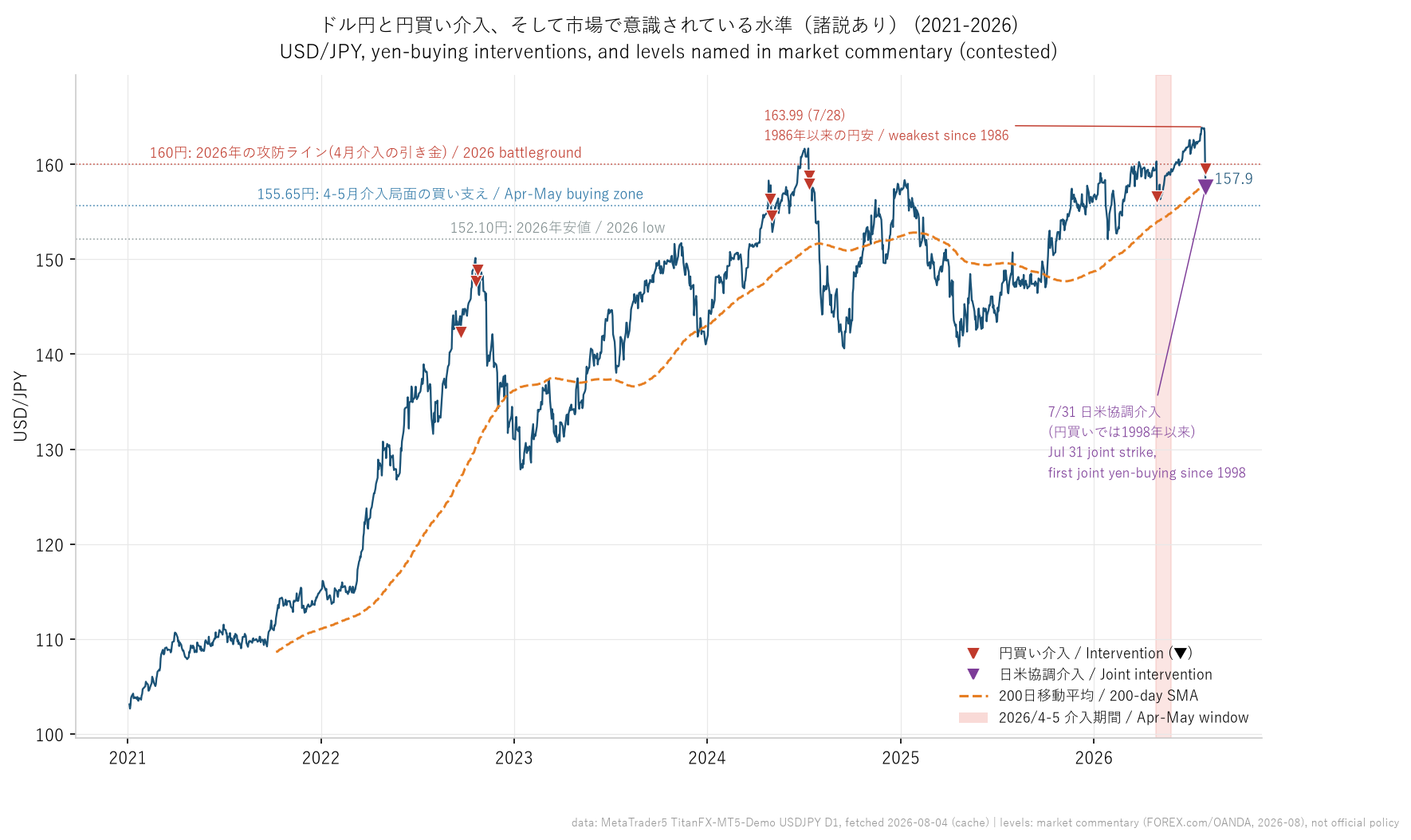
市場の現在地も測っておきます。当社の計測(MT5、TitanFXデータ)では、ドル円は7月28日に163.95円の高値を付けたあと、8月4日時点で157.94円。200日移動平均線※はちょうど157.95円で、終値はその真上に乗っています。7月31日の協調介入の日に、終値ベースで6月以来初めてこの線を割り込みました。テクニカル分析の世界でこの線を重視する論者は多く(例えばFOREX.comは「過去3年で最も機能したトレンド指標」と評しています)、ここに定着するかどうかが、介入の持続力を測る次の物差しになります。ただし断っておくと、公式な「防衛ライン」なるものは存在しません。チャートに引いた水準は、いずれも市場のレポートで語られている目安にすぎません。
Let us also measure where the market stands. By our own measurement (MT5, TitanFX data), dollar-yen peaked at 163.95 on July 28 and sat at 157.94 as of August 4. The 200-day moving average※ is at exactly 157.95, so the close is resting right on the line. On July 31, the day of the joint strike, the pair closed below that line for the first time since June. Plenty of technicians treat this line as the trend arbiter (FOREX.com, for one, calls it "the best trend indicator over the past three years"), and whether price settles below it is the next gauge of the intervention's staying power. One caveat, clearly stated: there is no such thing as an official "defense line." Every level drawn on our chart is merely a reference point discussed in market commentary.
※ 200日移動平均線とは、過去200営業日の終値の平均を結んだ線のことです。長期トレンドの目安として世界中のトレーダーが参照するため、価格がこの線を上抜け・下抜けする局面では売買が集中しやすくなります。
※ The 200-day moving average is the line connecting the average of the past 200 daily closes. Because traders worldwide reference it as the long-term trend gauge, buying and selling tend to cluster whenever price crosses it.
編集部の見立て
Our Take
最後に、この先を測るためのチェックリストを置いておきます。
Finally, a checklist for measuring what comes next.
| 日付・イベント | 何を確認するか |
|---|---|
| 毎週木曜: FRB週次バランスシート(H.4.1) | 「海外公的機関向けレポ」残高が跳ねていれば、FIMA経由の介入資金調達の一次証拠になります |
| 8月7日: 米雇用統計 | FOREX.comいわく「介入の賭けの成否は雇用統計次第」。ドル側の材料で反発が始まるかどうか |
| 8月末: 財務省の月次介入実績 | 7月30日〜8月分の正確な介入額。8.45兆円という推定の答え合わせ |
| 9月FOMC | FIMA上限引き上げが議題に上がるか。1998年の「8週間後」もこの近辺です |
| 9月の日銀会合 | 植田総裁が示唆した利上げ窓(9月か10月)。日銀が動かなければ時間稼ぎ説が優勢に |
| 200日線(157.95円) | 終値がこの下に定着するか。定着すれば介入は「流れを変えた」ことになります |
| Date / event | What to check |
|---|---|
| Every Thursday: Fed H.4.1 weekly balance sheet | A jump in repos to foreign official accounts would be primary evidence the intervention was FIMA-funded |
| Aug 7: US payrolls | Per FOREX.com, "Japan's intervention gamble now rests on payrolls". Watch whether the dollar side reignites |
| Late Aug: MOF monthly intervention data | The exact July 30 onward amounts; the answer key for the 8.45 trillion yen estimate |
| September FOMC | Does the FIMA cap raise reach the agenda? The 1998 "eight weeks later" clock also lands near here |
| September BOJ meeting | Ueda's flagged hike window (Sep or Oct). No BOJ move, and the time-buying camp wins |
| The 200-day line (157.95) | Does the close settle below it? If so, the intervention changed the trend, not just the week |
見立てはこうです。今回の主役は、介入の金額でも、円の水準でもありません。世界最大の米国債保有国が、米国債を売らずに史上最大級の介入資金を用意できた。この一点が、これまでの為替介入と今回を分けています。そしてその弾を装填するのは、東京ではなくワシントンです。ベッセント長官の「上限引き上げ」が9月のFOMCで形になるなら、それは単なる技術的変更ではなく、同盟国の通貨と米国債市場を一本の配管でつなぐ、新しい仕組みの制度化です。歌舞伎かブレトンウッズ2.0かという論争は、その瞬間に答えが出ます。なお、つみたてNISAなどで米国株や米国債のファンドを持っている方には、円高は基準価額の逆風です。上のチェックリストは、そのまま自分の資産のチェックリストでもあります。
Our take: the protagonist here is neither the size of the intervention nor the level of the yen. The world's largest holder of US Treasuries raised one of the largest intervention war chests in history without selling a single bond. That one fact separates this episode from every intervention before it. And the hand loading that ammunition is in Washington, not Tokyo. If Bessent's "upsize" takes shape at the September FOMC, it will be no mere technical tweak but the institutionalization of a new machine, one pipe connecting allied currencies to the US Treasury market. The kabuki-versus-Bretton-Woods-2.0 debate gets its answer at that moment. And if you hold US stock or bond funds through tsumitate-NISA or similar, note that a stronger yen is a headwind for your fund's NAV: the checklist above doubles as a checklist for your own portfolio.
ところで、この「介入で守られていたのは実は米国債」という話、金融好きの同僚や友人との飲み会では格好のネタです。次に介入の速報が流れた夜は、まさにこの記事の答え合わせが動く夜。「ちょっと一杯やりながら答え合わせしよう」となったら、店探しと予約はOmochiにお任せください。
By the way, "the intervention was really protecting Treasuries" is prime material for drinks with finance-minded colleagues and friends. The next night an intervention headline flashes is exactly the night this article's scorecard moves. When "let's check the answers over a drink" happens, leave finding and booking the venue to Omochi.